
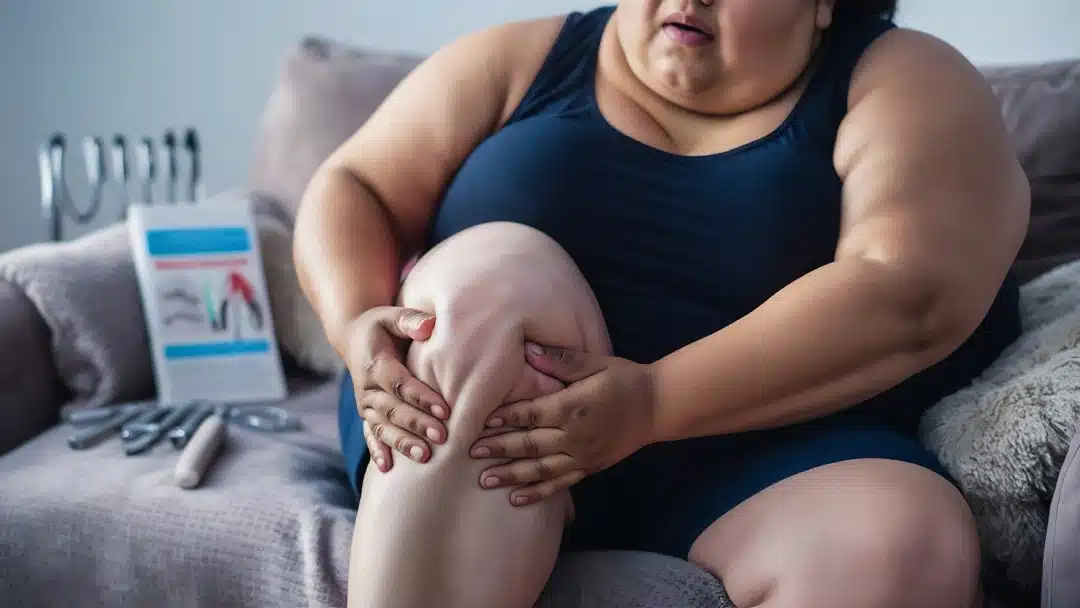
Obesity and Its Effect on Bones & Joints
Obesity is a global concern. Nearly 640-660 million people (12-14% of the world’s population) worldwide are obese. While already serious, obesity can become an even bigger problem in the years to come.
Most people restrict their understanding of the condition to heart disease, blood sugar, or appearance. But obesity affects your body in more ways than you can think.
Deteriorating bone and joint health is one of them.
Did you know that every extra pound of body weight you carry exerts an excruciating five to seven pounds of additional pressure on your knee joints?
Yes. Obesity takes a heavy toll on your musculoskeletal system, resulting in several long-term complications. But in what ways does obesity do it?
As the best orthopedic hospital in Pune, we receive many obesity-related bone and joint health cases. Accordingly, we consider it important to discuss the ways in which obesity affects bone and joints. Here’s a blog that does it.
What is Obesity?
Before we explore obesity’s impact on bones and joints, let’s learn what it means.
Obesity means the accumulation of body fat, measured via Body Mass Index (BMI). A BMI of 30 kg/m² or higher often denotes obesity.
The condition results from an energy imbalance. It means your body consumes more calories than it spends over a period of time. But obesity isn’t always tied to overeating. It also results from various other factors. Some of them include sedentary lifestyles, genetic predisposition, hormonal irregularities, or poor dietary quality. Medications and environmental factors also play a critical role!
You must also note that not every case of obesity is the same. The body can accumulate different types of fats. For instance, there’s visceral fat, which accumulates around organs. On the other hand, there’s the subcutaneous fat that lies just under the skin. Each fat has its unique metabolic consequences.
Obesity is also chronic and progressive. If left unchecked, it can aggravate and culminate in a series of problems. Some of them include biochemical imbalance, mechanical strain, and, of course, increased risk of joint and bone pathologies.
Now that you’ve seen what obesity is, let’s focus on the core topic – the impact of obesity on bone and joint health.
7 Ways Obesity Impacts Bone and Joint Health
From increased mechanical load to reduced mobility, here are seven ways you must be aware of and why you must maintain a healthy weight range.
- Increased Mechanical Stress
For you, it is just a kilo of weight gain. But for your bones and joints, that kilo or two translates into the pressure and stress of several. This increased weight exerts mechanical stress on your knees, hips, and ankles. This, in turn, wears down the cartilage (a smooth cushioning between your bones), speeding up osteoarthritis. Thus, you encounter problems like joint stiffness, pain, and loss of mobility early in life.
- Higher Risk of Spinal Problems
The added weight, particularly around the abdomen, shifts your body’s center of gravity, changing your posture. This results in a sustained axial load on the lower back, increasing pressure on the intervertebral discs. The overload causes chronic back pain, disc herniation, and spinal disc compression. Over time, these problems become unbearable and may demand surgery.
- Tendon and Ligament Damage
Constant joint stress affects surrounding soft tissues as well. Tendons and ligaments stay under increased pressure to stabilize the heavier joints. This can make you prone to rotator cuff tears, tendonitis, and meniscal tears even during simple, routine activities.
- Hormonal and Metabolic Disturbances
Obesity results in several related problems. Some of them can include insulin resistance, dyslipidemia, altered sex hormones, and disrupted vitamin D metabolism. Vitamin D deficiency is common in people suffering from obesity. It is because obesity impairs calcium absorption, which is essential for bone strength.
- Higher Risk of Bone Fracture
People suffering from obesity are often more susceptible to certain fractures, despite a higher bone density. It is because obesity compromises bone quality, strength, and its capacity to repair itself. While fractures are one risk, slower healing is another. The reason? Poor blood circulation, impaired bone regeneration, and higher inflammation. Slower recovery can further worsen the already problematic fractures.
- Reduced Mobility
Additional weight affects movements. Therefore, even routine activities like walking, balancing, and climbing stairs become more challenging. Reduced physical activity weakens muscles. Weak muscles refer to less stable joints, increased susceptibility to misalignments, and faster wear and tear. In other words, obesity traps you into a spiral that worsens your condition with time.
- Complications in Orthopedic Surgery
Obesity weakens and damages joints. Therefore, such people often require joint replacement surgery. However, obesity complicates the outcomes of such surgeries. It can lead to prolonged recovery, infection vulnerability, loosening of the prosthesis, etc.
Of course, in a situation like this, or even otherwise, your choice of a joint replacement hospital in Pune or a bone fracture hospital in Pune becomes crucial.
However, the best strategy is to prevent obesity. Here are generic tips.
How to Prevent Obesity and Ensure Bone and Joint Health?
Here are some obesity prevention tips for bone and joint well-being. We recommend visiting a doctor for a personalized plan.
- Maintain a diet rich in lean protein, vitamin D, calcium, and whole foods.
- Engage in low-impact exercises like cycling, swimming, and walking.
- Build muscle around the joints for better support and increased stability.
- Avoid processed fats, excessive sugar, and high-calorie idle snacks.
- Ensure a healthy body weight to prevent joint stress.
Keep Your Bones and Joints Healthy with Ranka Hospital’s Personalized Treatment!
Obesity can cause a series of complications, also encompassing bone and joint problems. Ranka Hospital is one of the best orthopedic hospitals in Pune that can help you deal with it effectively through personalized consultation. Want to meet us? Please call us at 020 – 24261530 to book an appointment.
